Masala Who Art in Heaven
Sculptural Installation (2025)
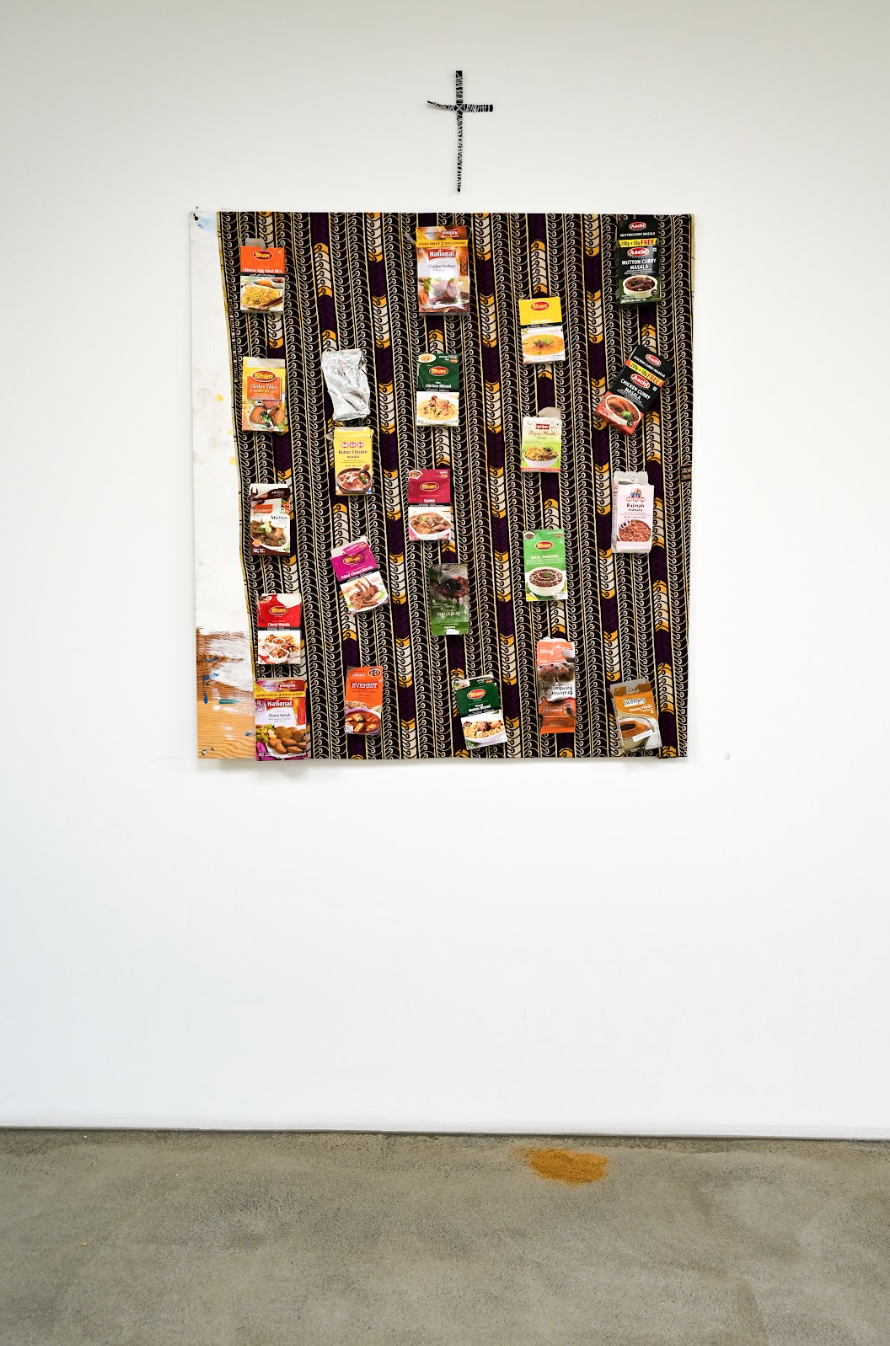
Sculptural installation + Ritual object
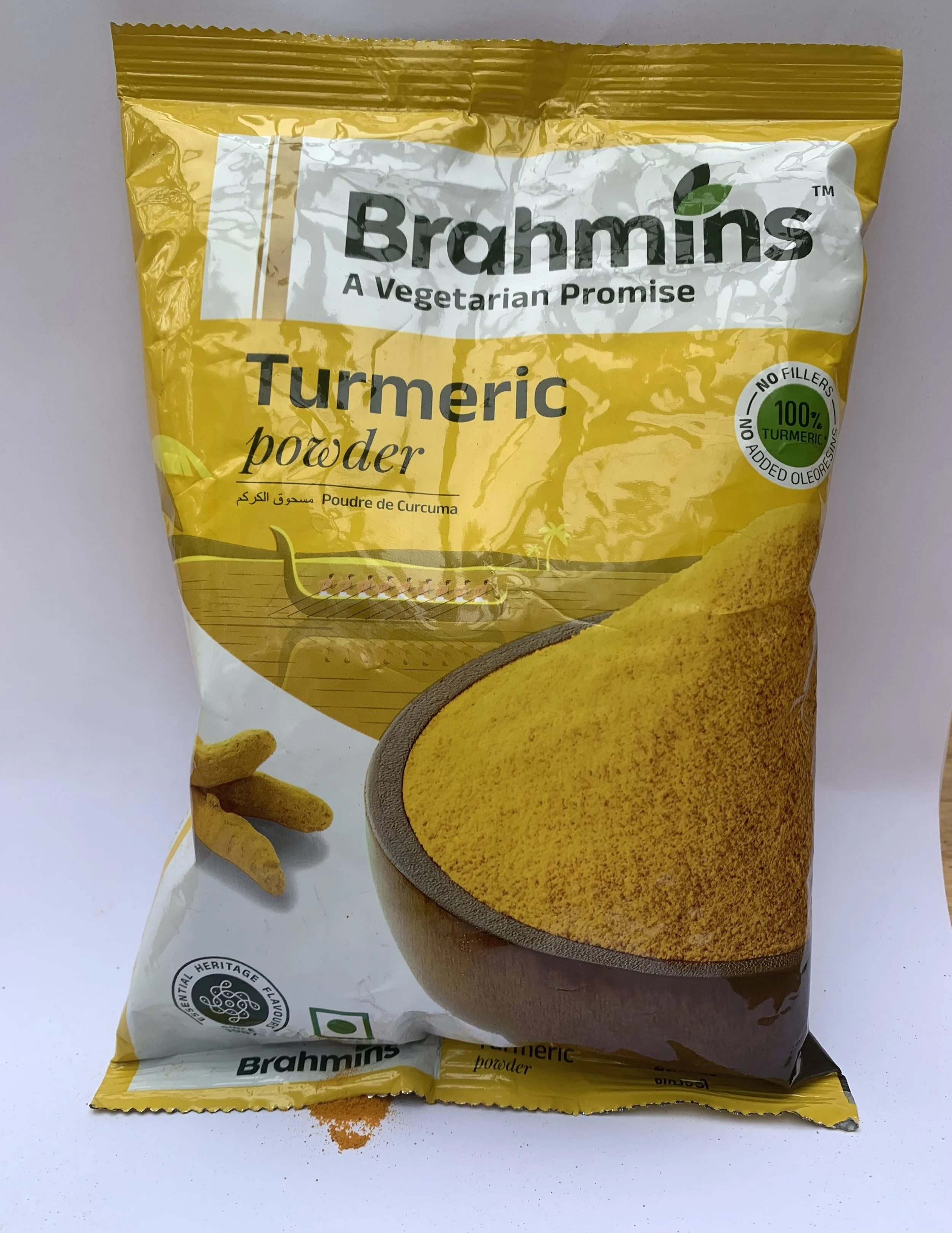
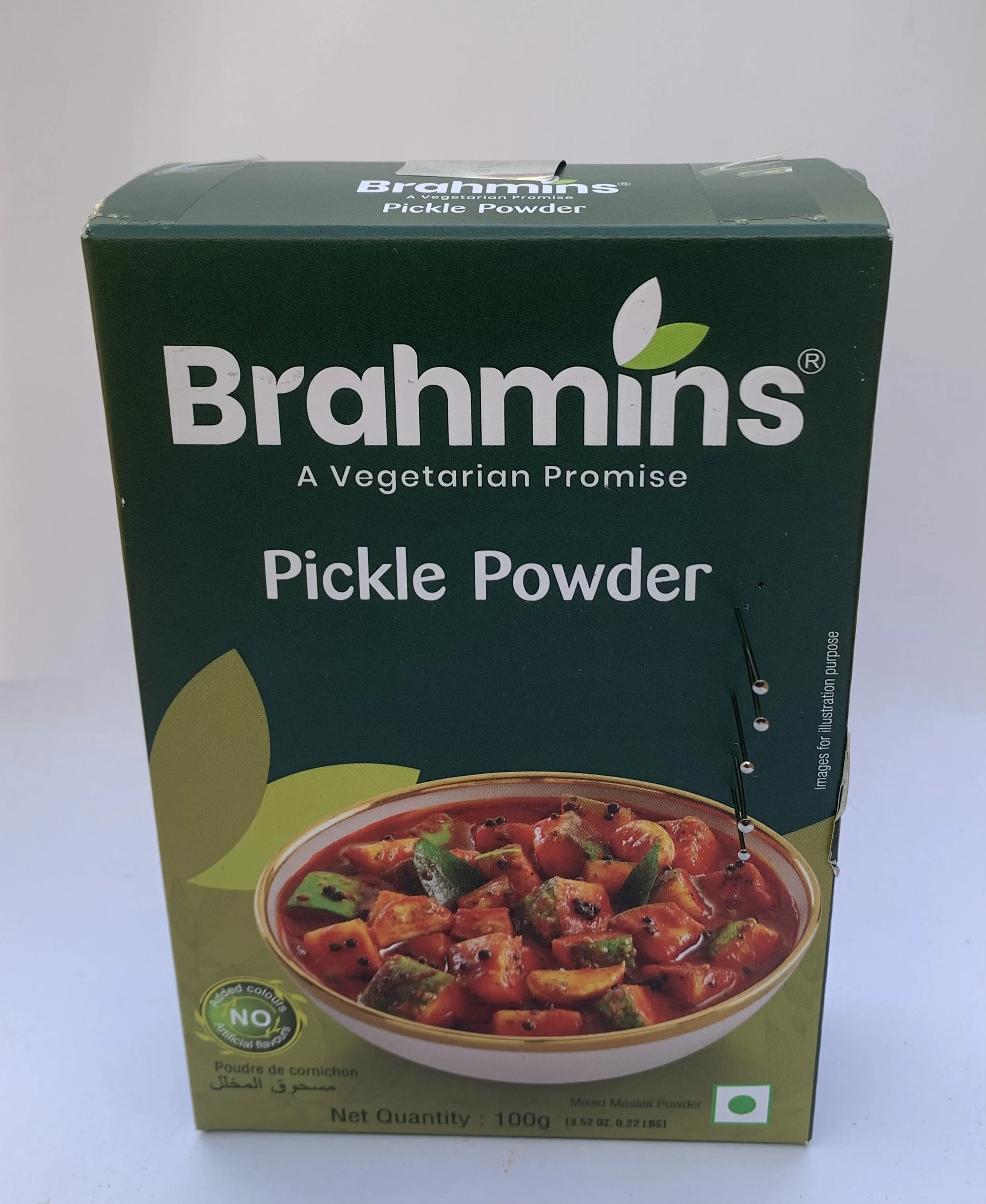
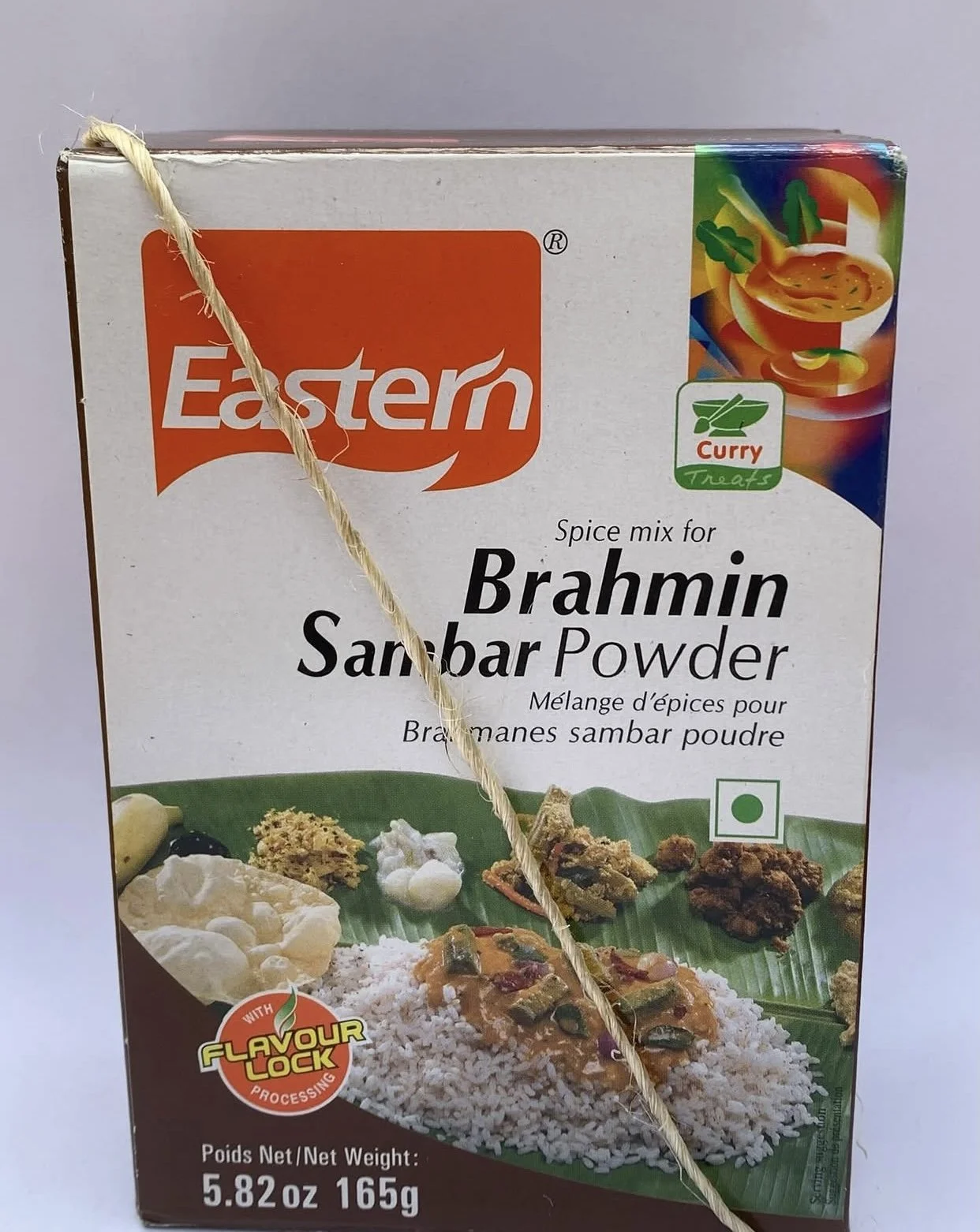
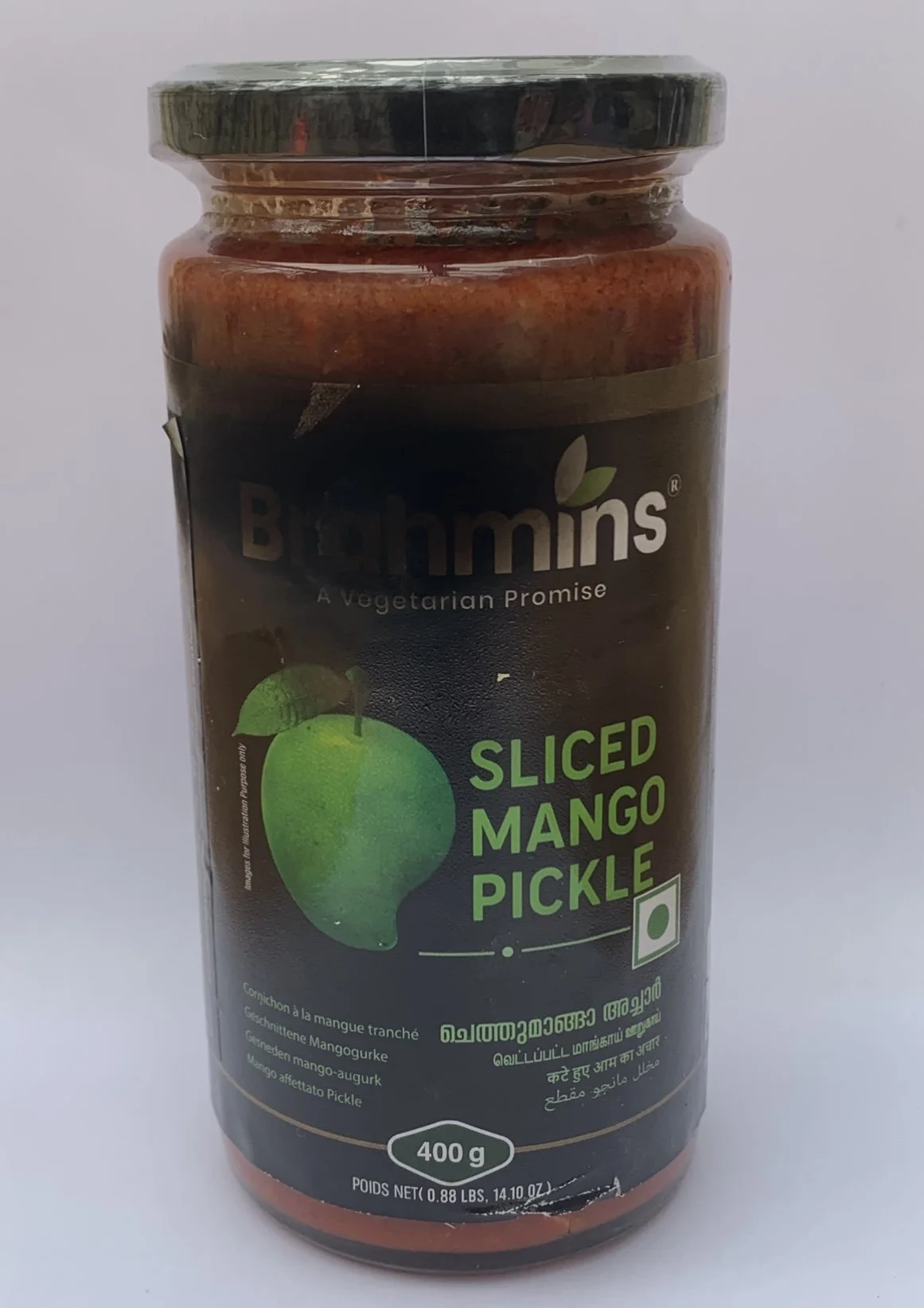
Materials: Commercial spice packaging, wax fabric, crucifix, turmeric.
Dimensions: Variable.
A caste-coded altar confronting purity politics, Christian aesthetics, and diaspora grocery aisles.
This didn’t begin as an artwork.
It began in a corner shop—where saffron spice boxes whispered purity, and god sat above the barcode.
We noticed the overlaps:
Colonial packaging styled like Christian altars.
Caste-coded ingredients in gospel fonts.
The holy and the harmful sharing the same shelf.
This is about taste and the systems that decide who gets to have it.
Premiered at Art Basel 2025, Masala Who Art in Heaven turns spice boxes into a shrine disguised as a spice rack — where caste reveals itself between the aisles.
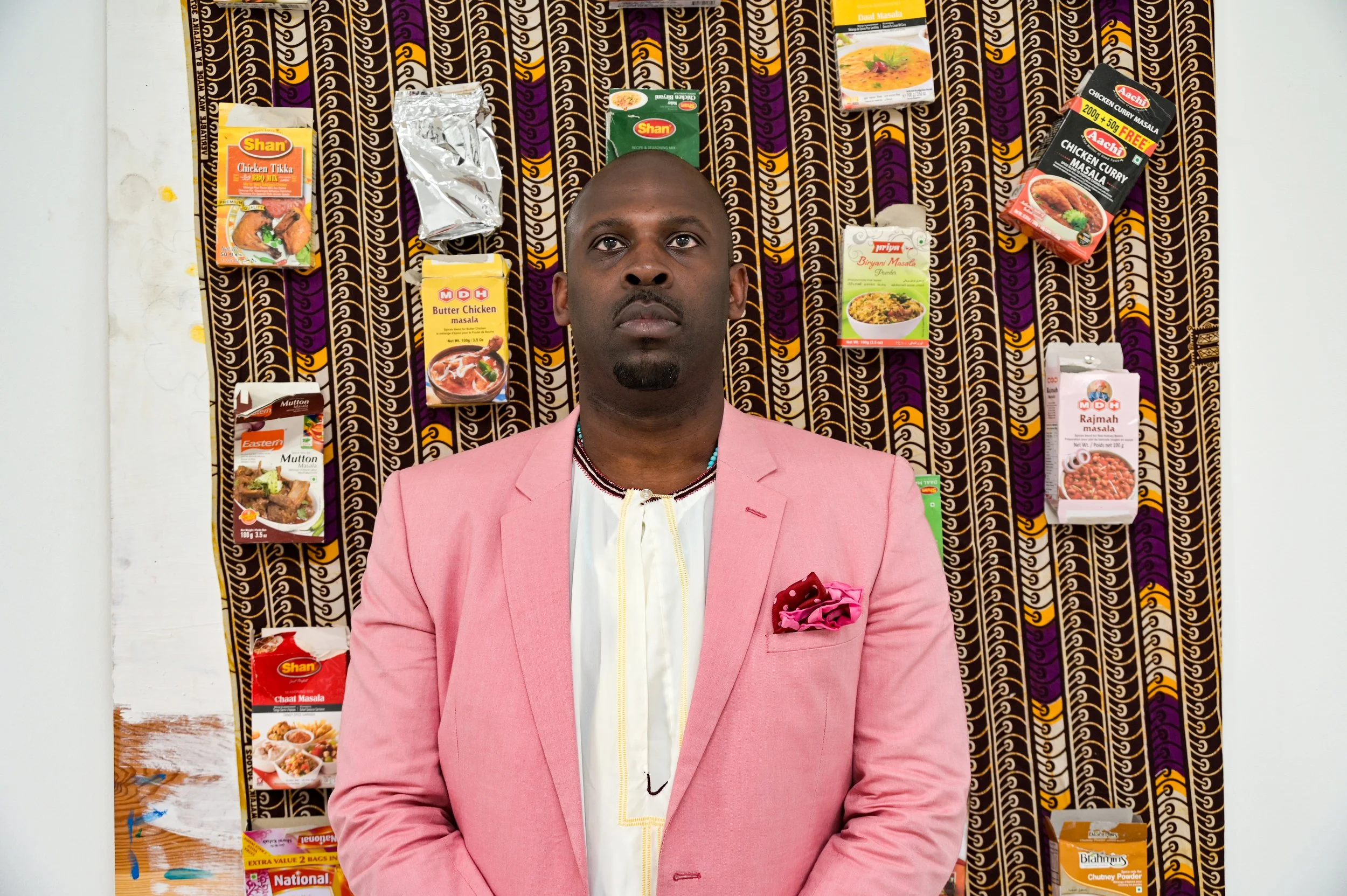
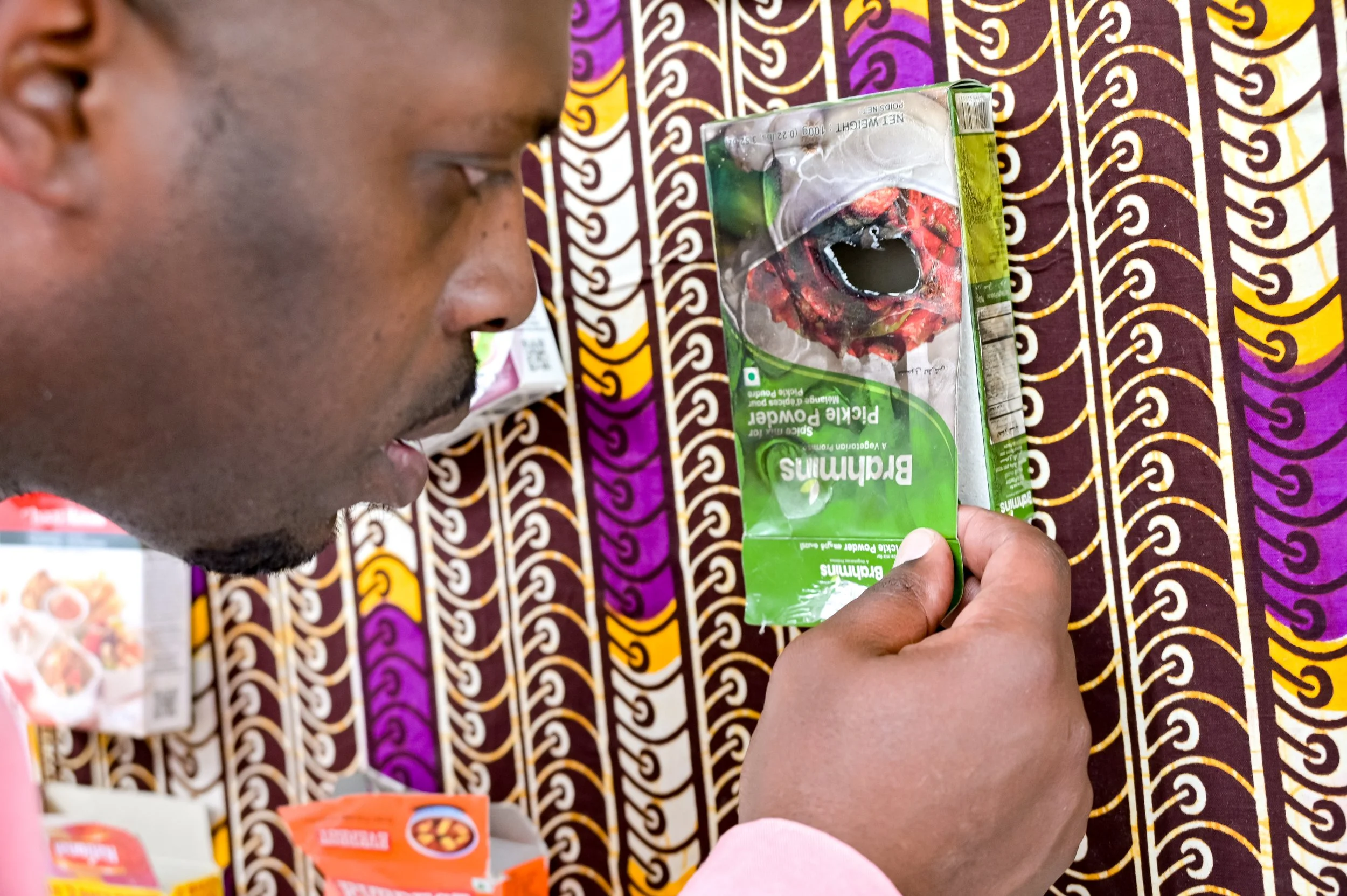
Rituals travel.
So do hierarchies.
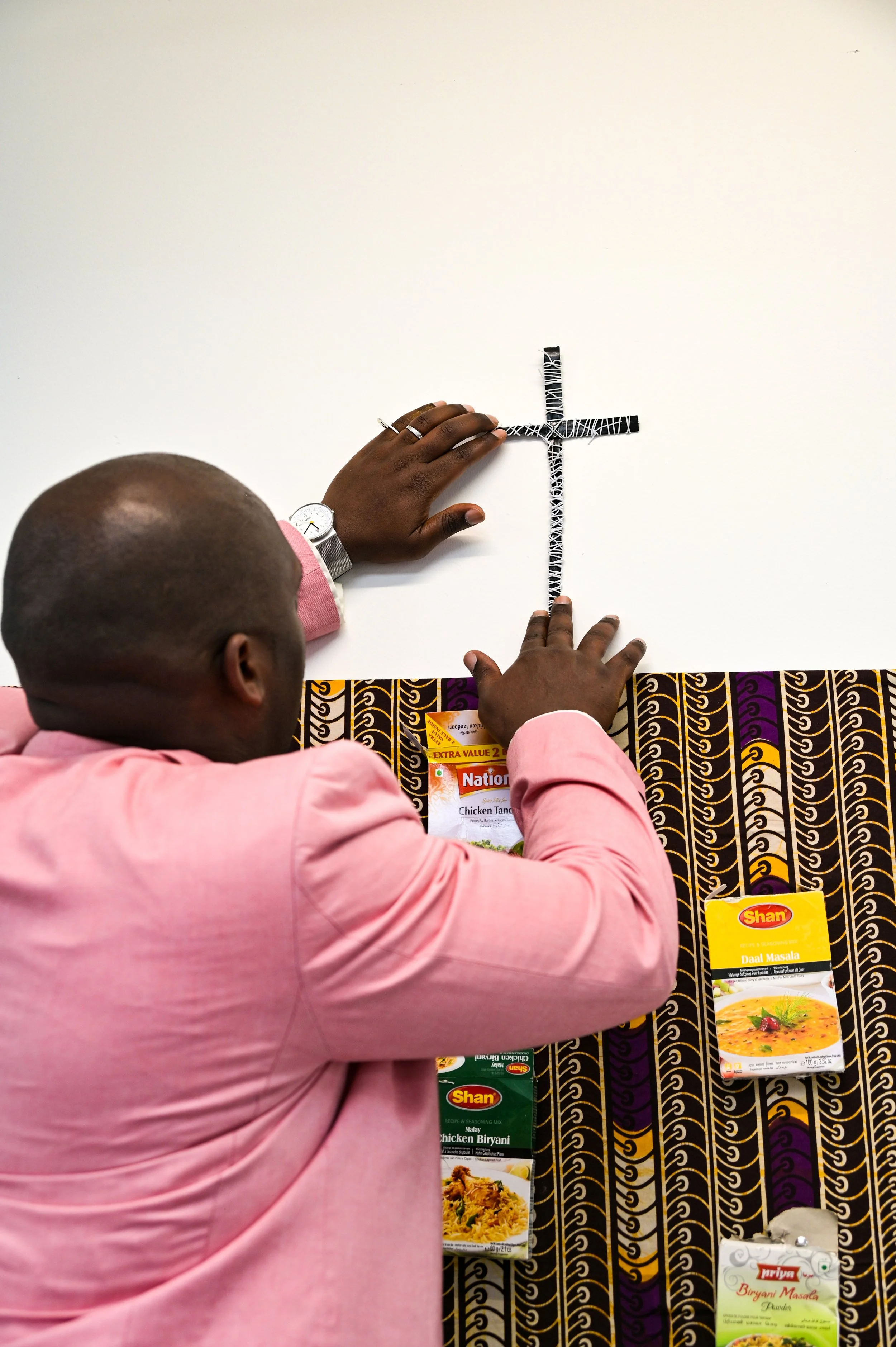
Food remembers
what systems try to erase.
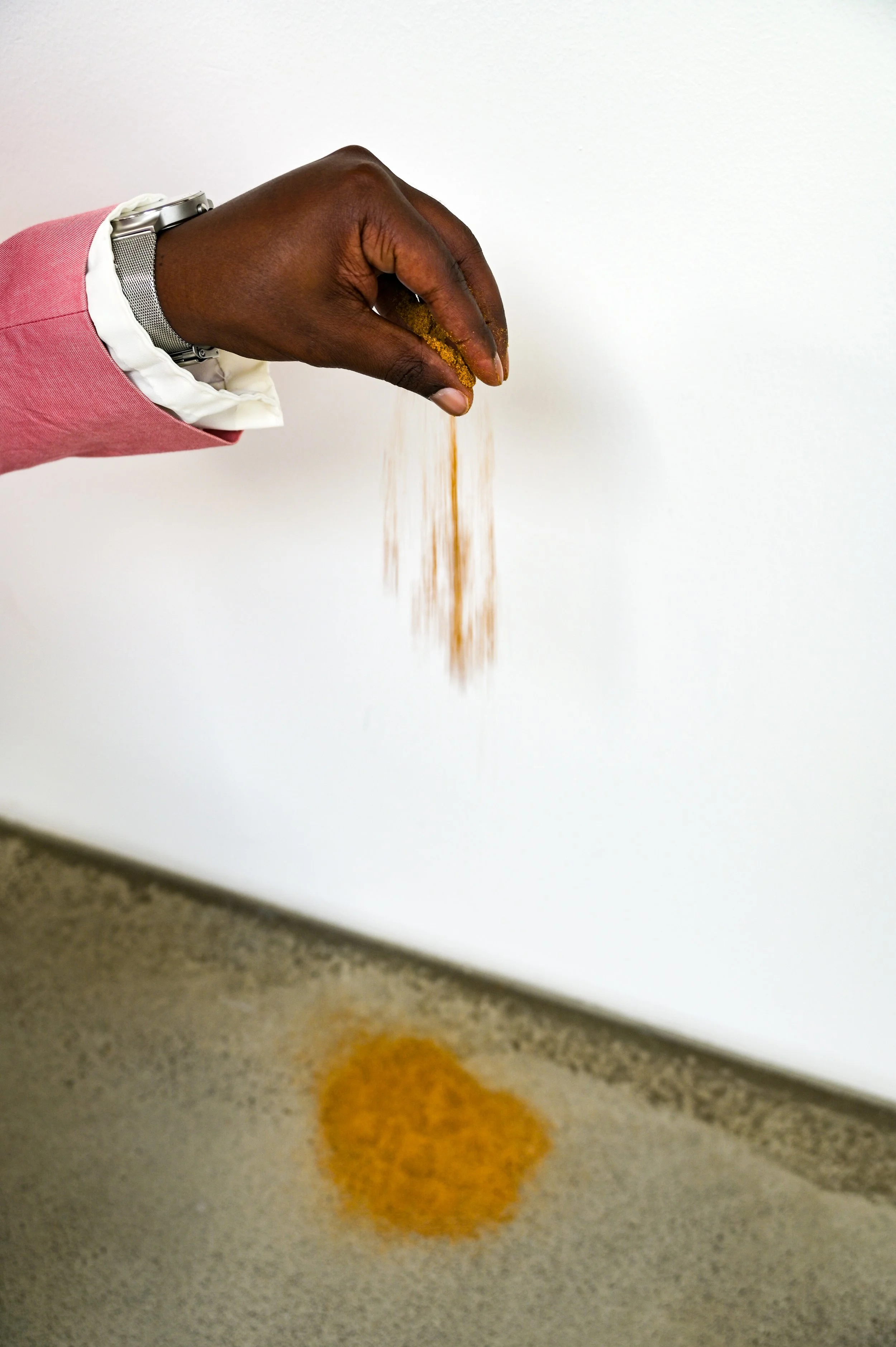
Since its presentation, the work has moved beyond the installation into public space—circulating through food cultures, audiences, and discourse.
What appears as packaging is now being read, questioned, and contested in real time.
Masala Who Art in Heaven
(with studies)
What began within the installation now continues through a series of material studies using food packaging.
These works isolate the object—surface, containment, naming—revealing how hierarchy moves through everyday materials.
Not as symbol, but as system.